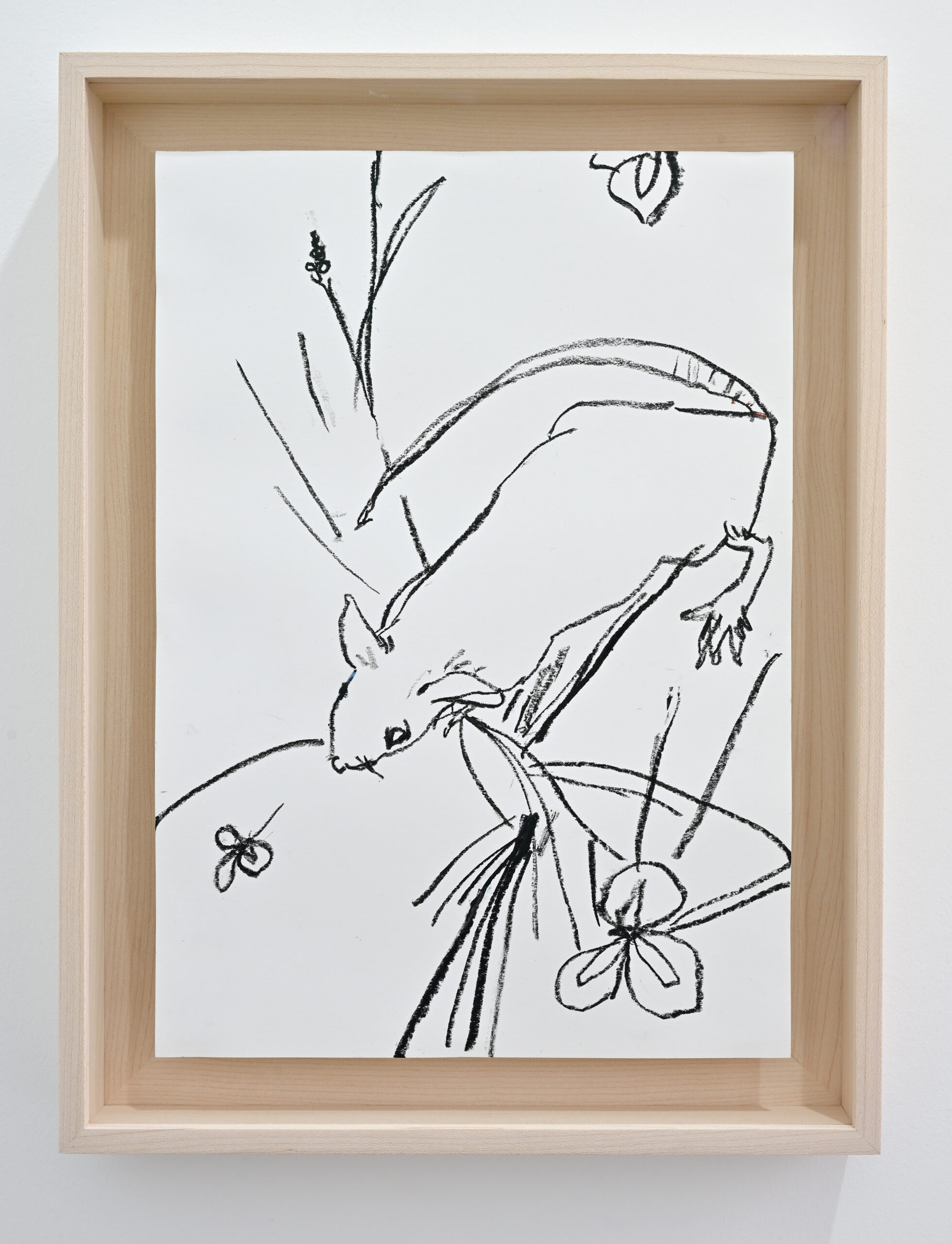
Wake up the old dog, he’s free, 2026
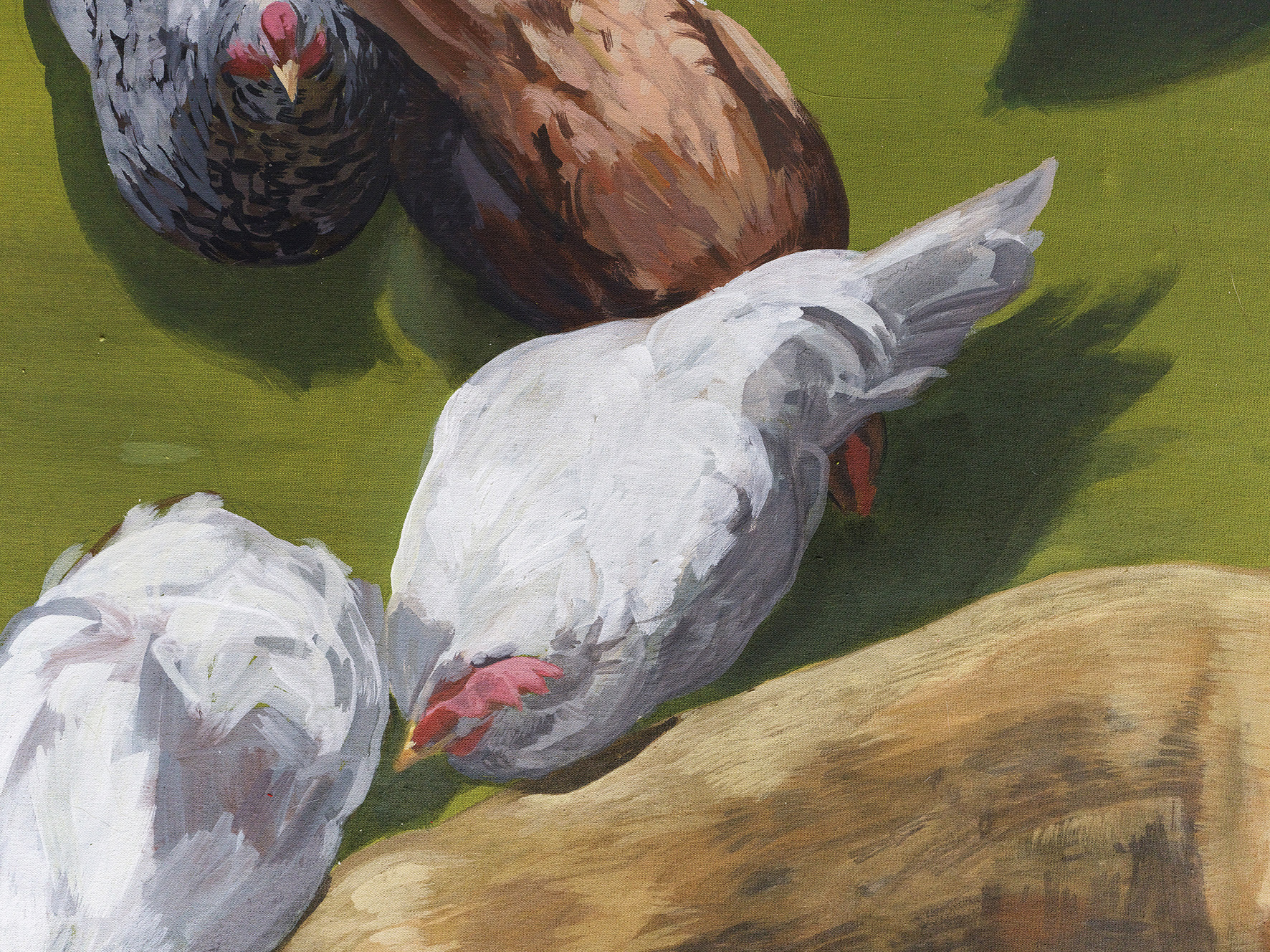
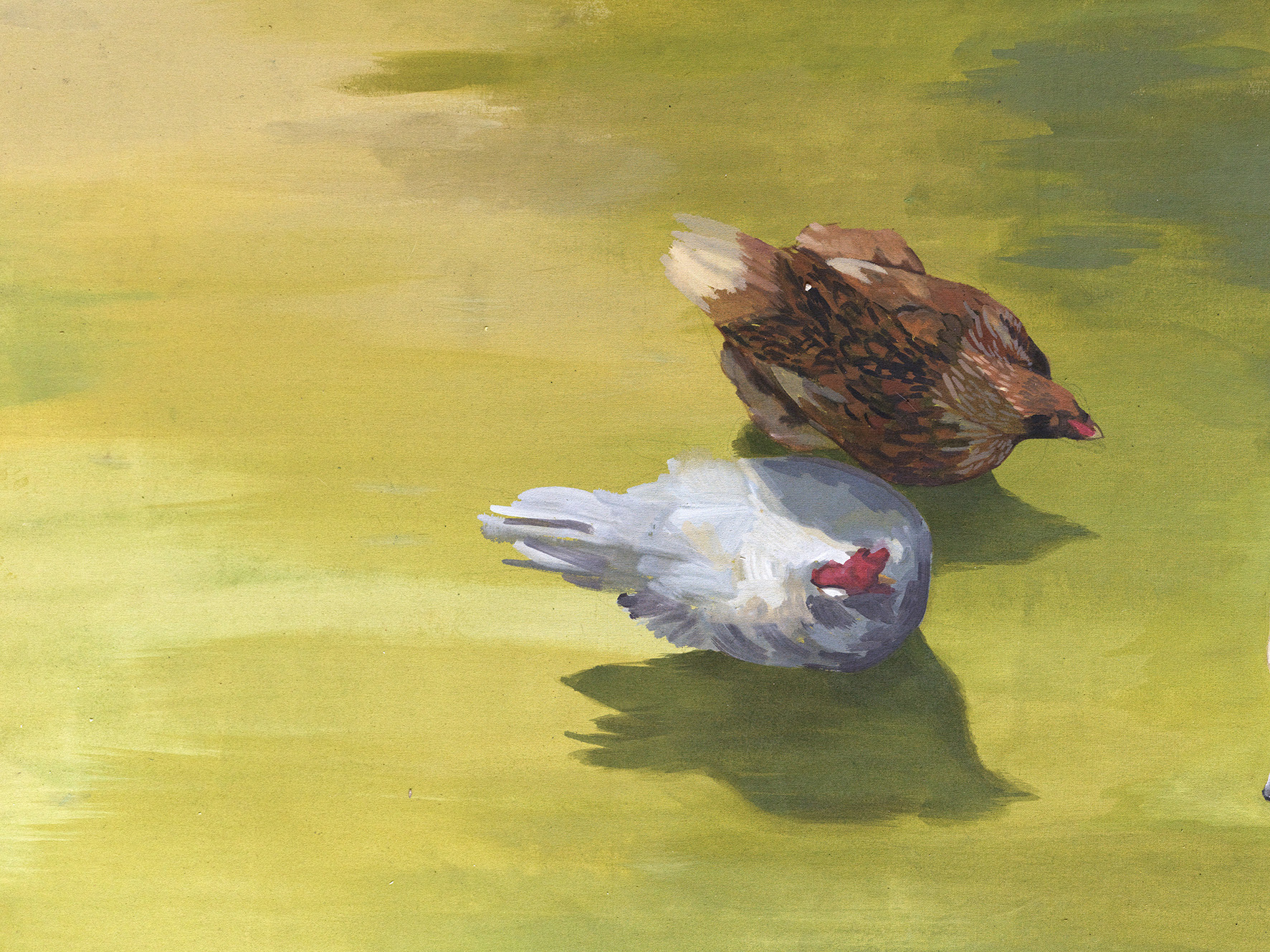
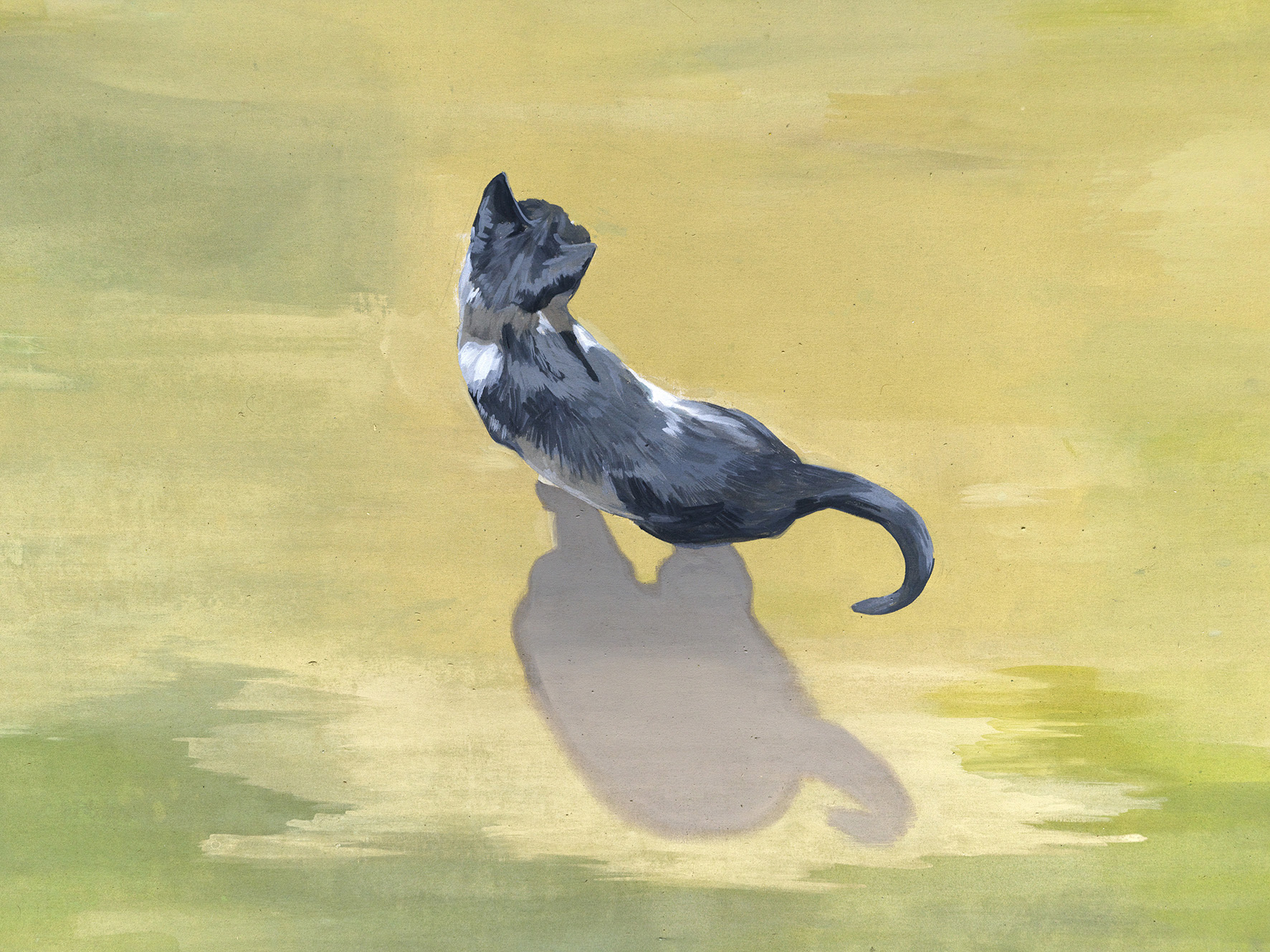
Acrylic on cotton and acrylic cloth, 740 x 380 cm; Etchings on paper, 125 x 150 cm; Oil pastel on paper, 29,7 x 21 cm
A Single Night. A–lounge Contemporary, Seoul (KR)
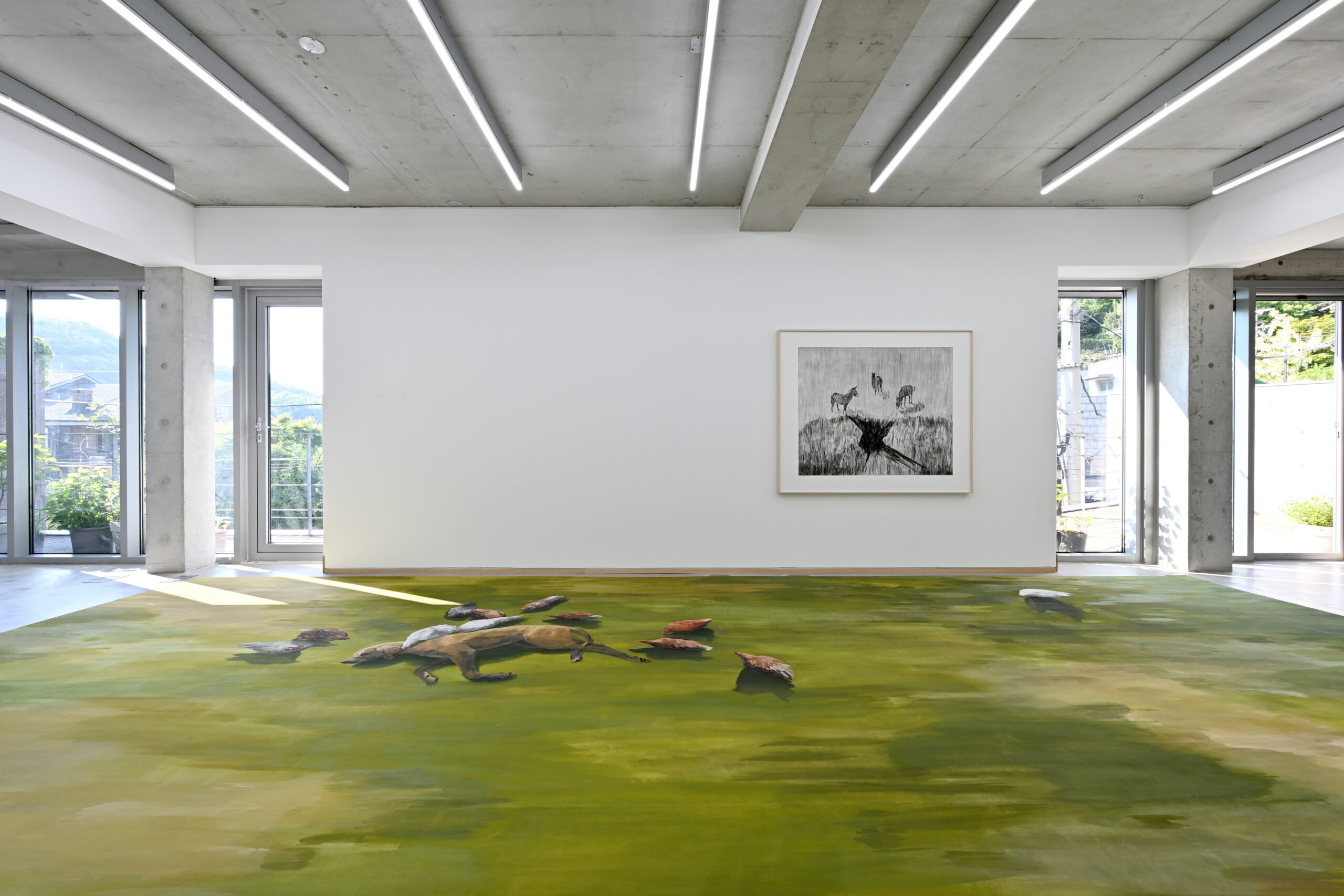
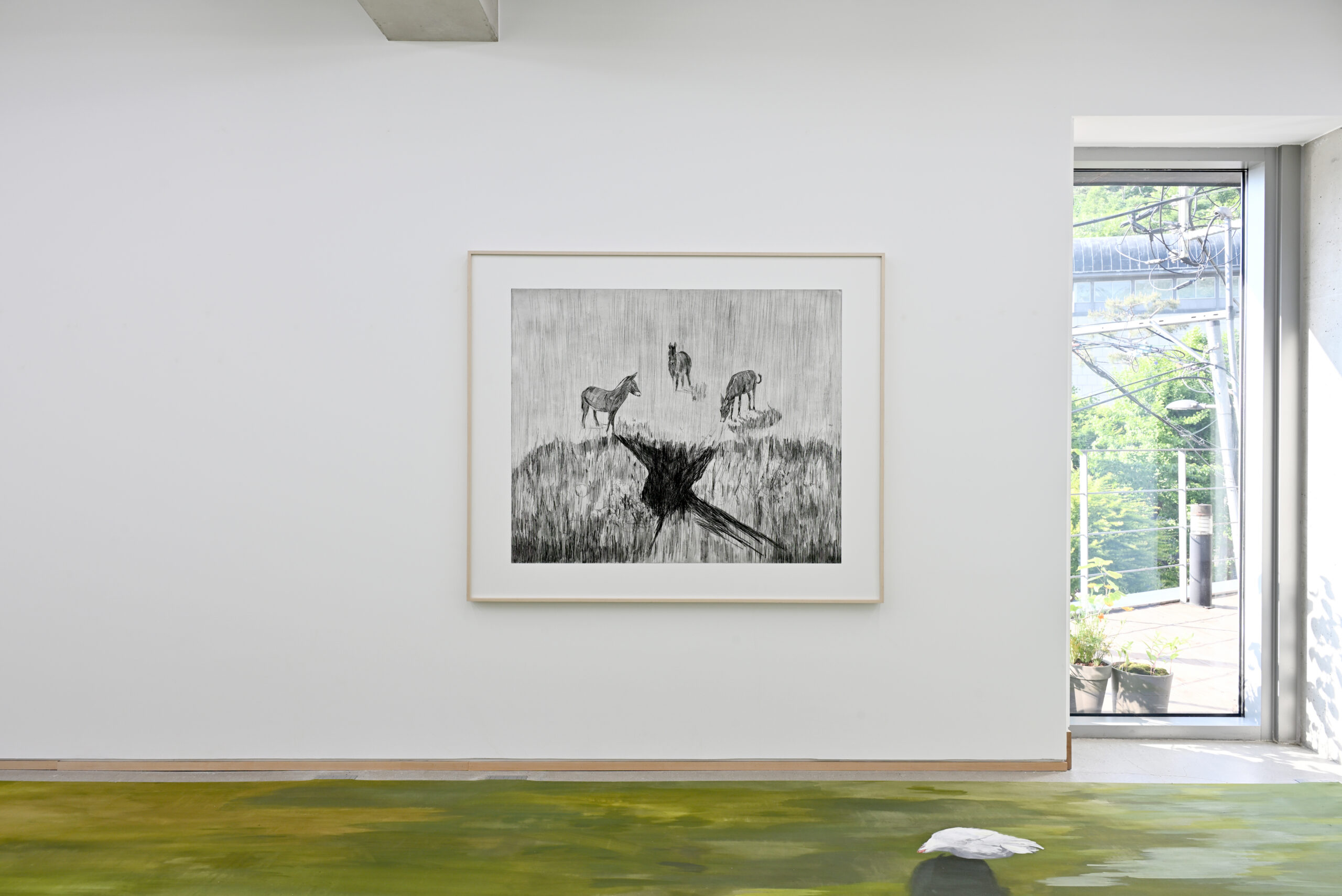
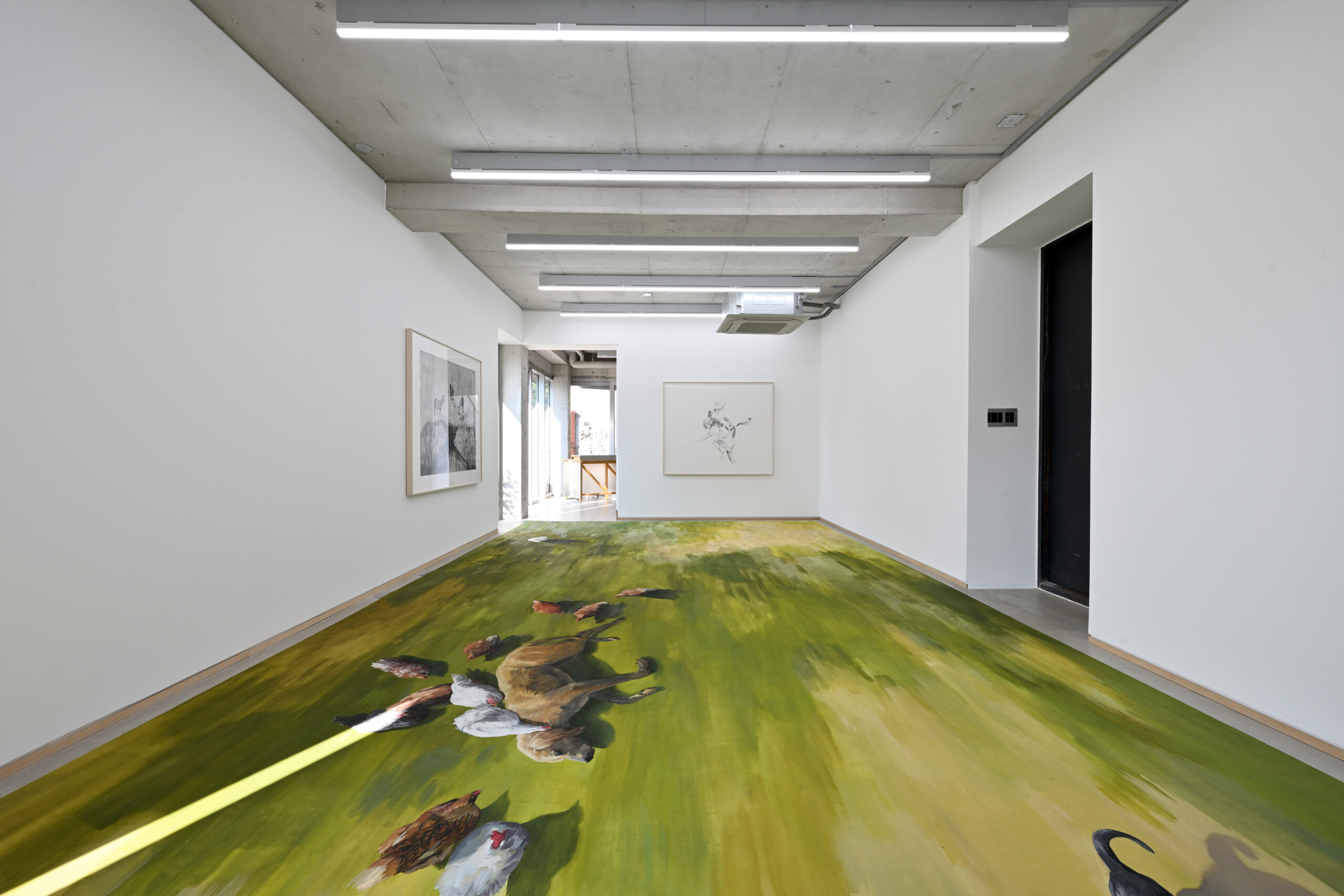
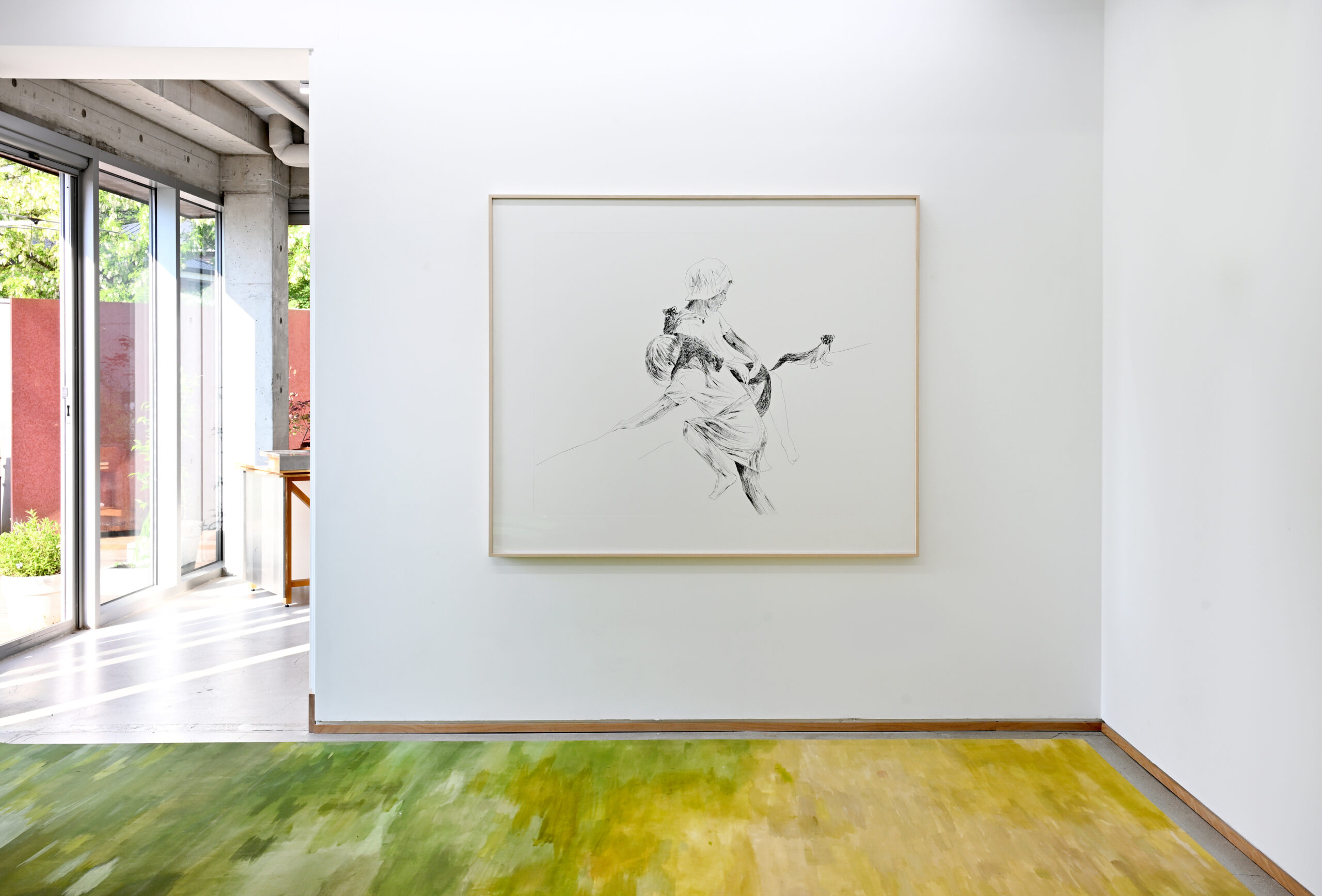
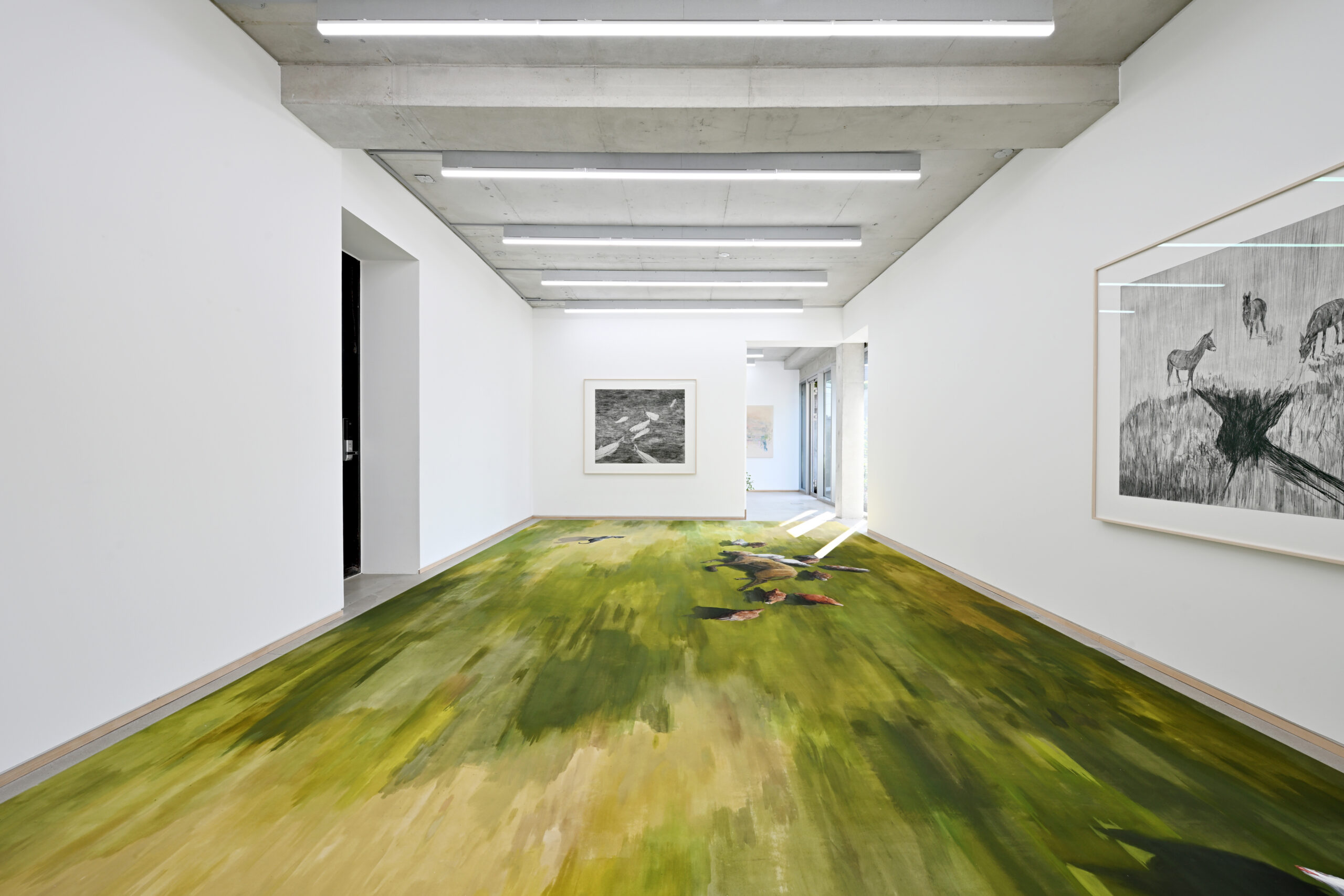
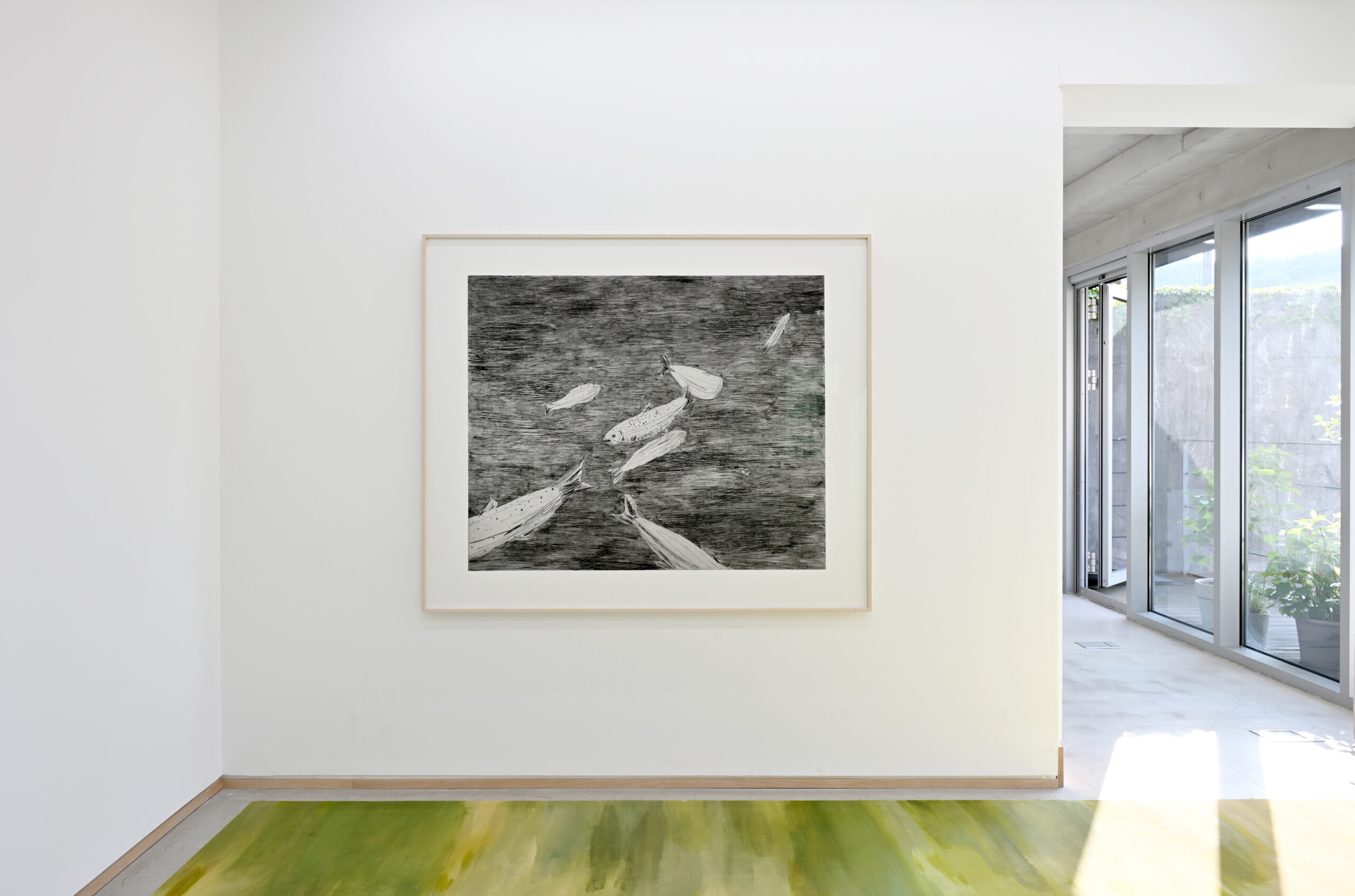
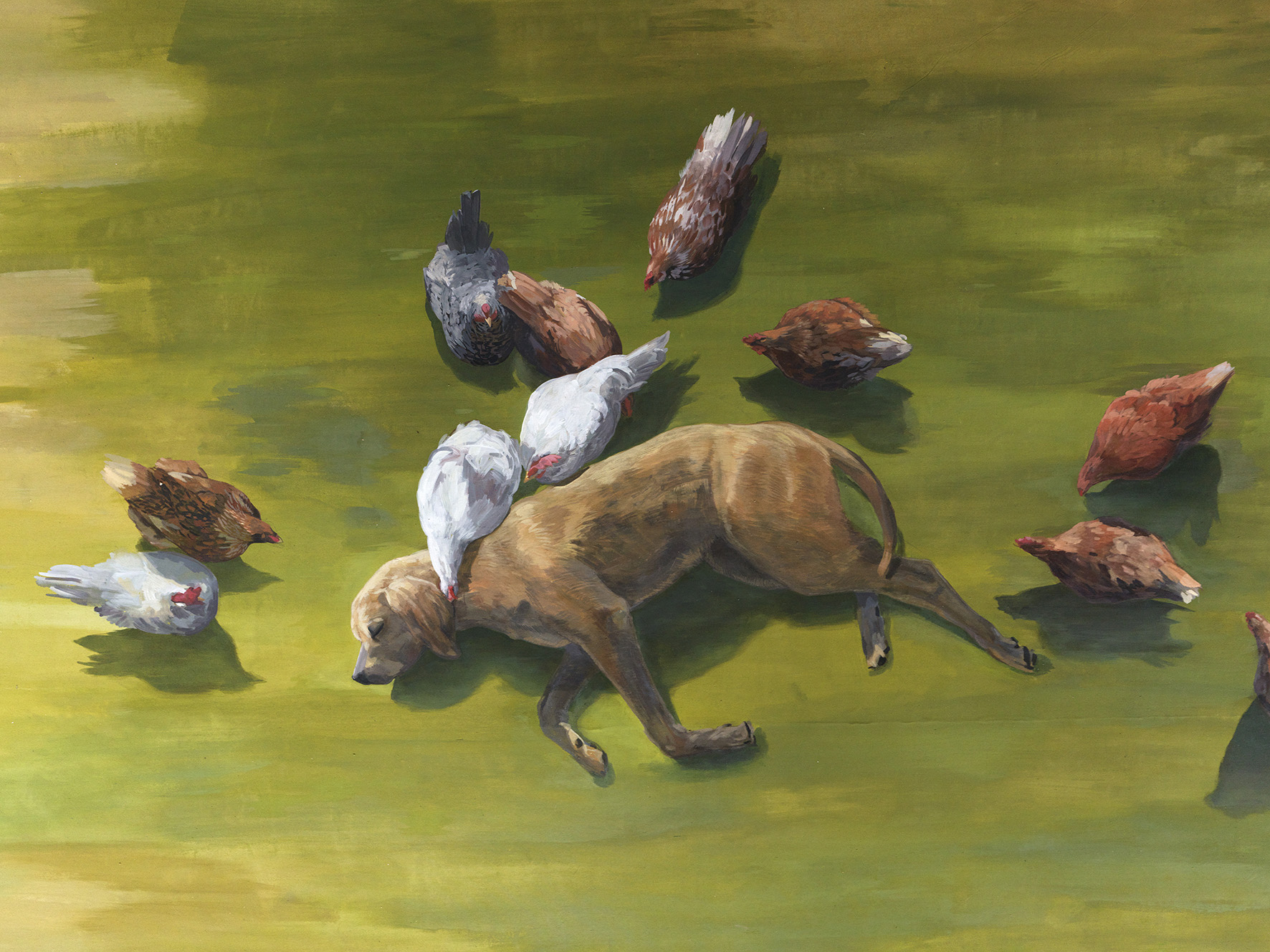
Wake up the old dog, he’s free is a painting on canvas for the floor, that gets consumed the more visitors will step on it to see it. In the large size etchings (Lightning, They Ate Our Clothes, Light Fish are Empty) the realization process was about marking a memory with a physical cut on the zinc plate as if it the action of biting could hold a feeling.
Exhibition text
A SINGLE NIGHT. Agnese Galiotto, Leeje, Chun Soohyun
by Meene Han
A time so dark that nothing can be clearly discerned, a time when every sound in the world awakens and covers everything in noise. A time when senses and dreams mingle, and each boundary begins to blur. The exhibition A Single Night imagines such a time. It invites you into the multilayered worlds that exist within it. These are worlds that cannot be mastered by sight, and therefore cannot be fully explained by language. They are strange, and thus frightening; unpredictable, and thus unsettling; worlds perhaps filled with things that cannot be understood.
When Jakob von Uexküll proposed that every living being has its own particular environmental world, or Umwelt 1), he showed that the world is not given as a single objective stage. According to the concept of Umwelt, sensory organs are not passive devices that receive one already-existing world, but conditions through which a world is actively constituted.¹ If we add to this Donna Haraway’s concept of “situated knowledges,” then insofar as we always see the world and accumulate knowledge through a particular body, sense, and position, there can be no single, completely objective truth. What we can do, instead, is examine how each partial knowledge connects and enters into relation with others.² At the same time, Uexküll’s thought exposes the old arrogance by which humans have mistaken their fragmentary experience for the universal truth of the world. No sense can encompass the whole world. It is not that we have failed to approach the essence of the world because we have not sensed enough, or because we have not looked fully enough. Rather, the very hope that we might approach the essence of the world once our senses are completely opened may itself be the illusion that this night must undo. In this noisy, pitch-dark night, where no one’s senses are whole, we must let go of even the smallest certainty and endure this invisibility.
Within that uncertainty, you must cross the boundaries between worlds yourself — boundaries that have loosened, but still remain. You must try to imagine senses beyond kinaesthesia, touch, and sight; imagine another world you have never experienced; and willingly visit their worlds. For that world may be the world of your dog, the world of your garden, or even the world of the mug that holds your old memories.
Because we live in such different worlds and yet ultimately occupy the same time and space, entangled with one another; because we form one another’s bodies, become one another’s conditions, and at times become the very ground that makes one another’s lives possible; and because, within this, we share a sense of affective solidarity and care, we must willingly imagine moving into those worlds. Worlds differ from one another, yet we invite one another into our own worlds and are invited in return, living through contact, infection, and mutual contamination. So now, on this night, let us set down the arrogant belief that human cognition and sensation can achieve anything, and imagine a movement into worlds unknown.
There are three artists who guide you into this imagination. Having lived in different worlds and in different bodies, they carefully observe the environments that surround them, bringing into the frame the time of beings that cannot be fully grasped by human senses alone. They do not explain nonhuman others in human language, nor do they speak on their behalf. Rather, at the boundary where the human world and the nonhuman world touch, they hold onto the fleeting moments of contact that briefly occur there. These moments are time and space, and also neither; moments encountered only briefly in a dreamlike state, with will and consciousness set aside.
The world into which Agnese Galiotto guides us is the world of dreams: the threshold between wakefulness and sleep. There, language disappears and linear time comes undone. A dog sleeping beneath your feet, and the cats and chickens carefully approaching beside it, share the same surface with you, yet remain somewhere unreachable. In that world, as if a transparent membrane were stretched between you and them, you look, but cannot approach. Perhaps they, too, are looking back at you. Perhaps we are inside the dog’s dream. Like the black-and-white etched images spread across three walls, you become one of the fragmented images of the dream.
In this way, the world inside the painting — this world you do not know — seeps into your own. It has already been translated into a language and form you can recognise, placed to some degree within a frame. At the same time, it still contains noises that refuse translation. Through these incomplete images, you come to share, if only for an instant, the same fleeting moment with them.
And yet, if you still have not entered their world deeply enough, perhaps your imagination must begin with the things invisible upon its surface. Imagine becoming an ant crawling up from the soil beneath the indistinct blades of grass, finding its way with antennae, sensing place through touch. Imagine a lost ant burrowing into the dog’s fur and, before long, arriving inside the dog’s dream. Imagine experiencing, within that dream, a world of an entirely different scale, far exceeding the size of its own body. And then imagine, in one brief instant, that tiny ant piercing through the image on the canvas and crawling onto your foot.
Having entered the world of dreams, the next place you must cross into is the place of soil and atmosphere — elements that have long existed as mere background for humans. The artist Lee Je expresses their movements by overlapping, mixing, and kneading them together. This invites us to imagine a third eye, different from the mobility of human vision that shifts focus in order to distinguish and grasp objects. The senses of geology and airflow seem to remain within an extremely slow time, receiving everything into a quiet current like a camera shutter left open for a long exposure. Within it, the large and small events experienced by humans pass by lightly, as a few lines and colours.
Meanwhile, if you move closer and focus on the materials within the painting, this vast sense of time settles onto the surfaces of the pigment masses. Between surfaces that have been scratched and built up again, and traces pushed aside and covered over once more, time condenses and gathers. That immense force curls inward into tiny molecules. This is the power of an image with materiality, the magical force of the image. Perhaps it is a force composed by humans, one that can only be answered by the contaminated body called “human.” In these works, Lee Je further intensifies this materiality, mixing the surfaces and refusing to reveal stable contours. Perhaps this is because of a belief — itself contaminated — that such magical force will guide you deeper into imagination.
You walk once again over Galiotto’s painting. The image grows faint, and the surface is gradually worn down. In this way, you witness the process by which the canvas comes to wear the time of this world. Just as Lee Je’s painting approached you from image into matter, here you may come to imagine the world of another being: the canvas itself.
You have now crossed into a place where you can imagine the time of objects and spaces, and the environmental worlds they compose. The objects and structures within the flatly rendered images reveal a world that is heavy in its stillness, and delicate in equal measure. Where, and how, are abrasion and pressure, light and temperature, repeated contact and sunken time stored? In what way do the forces and traces left on a surface become memory?
A pinball, which within the human sensory world might appear as something moving quickly and lightly, rolls within its own world like an object bearing immense gravity. And yet, at times, it falls as though it were weightless, or as though placed in a space where gravity does not exist. Beyond it, the sunset shines and the sea appears. This strange place, like Alice in Wonderland, possesses the speed and flow of another sense. The shadow of a giant clock hand falls across the entire space, and beneath it, objects move as if they possessed wills of their own, using their own friction to propel themselves.
Video and music, movement and sonic data are composed of signals of light, arrangements of sound, edited rhythms, and digital images, appearing before you as a single immaterial event. Yet precisely this immateriality makes the world of matter more intensely imaginable. Data that cannot be held in the hand summons weight and falling, impact and vibration; it produces the tactile sense of things colliding, wearing down, and being pushed aside. But it remains unclear where, and through what, this sensation occurs. Only when the immaterial world and the material outside it — the surface of the painting, and the image that emerges upon that surface as another kind of immateriality — intersect, do their worlds and ours briefly collide.
On this night, when the passages between these different worlds briefly open, you can no longer understand the world by relying on a single sense. Images gain weight like matter, matter blurs like dreams, and sound feels its way across invisible surfaces. This night is not a time of understanding, but a time of resonance, and of imagination. You cannot know the dog’s dream, you cannot possess the touch of the earth, and you cannot live the time of objects. Yet the fact that something cannot be known does not mean that nothing is happening, nor that it has nothing to do with us. When we acknowledge that there are worlds we cannot reach, we can finally approach them without possessing them. Here, you are no longer a viewer, but a visitor briefly lost. And perhaps becoming lost is the most fitting attitude we can take before another world.
1) According to the concept of Umwelt, the sensory organs are not passive devices that receive a single, pre-given world, but rather the very conditions through which a world is actively constituted. Jakob von Uexküll, The Worlds of Animals and Humans, trans. Jeong Ji-eun, Book Publishing b, 2012.
If we add Donna Haraway’s concept of “situated knowledges” to this perspective, then insofar as we always perceive the world and accumulate knowledge through a particular body, sensory apparatus, and position, no single, fully objective truth can be established. What we can do, instead, is examine how these partial forms of knowledge connect with and relate to one another. Donna J. Haraway, “Situated Knowledges: The Science Question in Feminism and the Privilege of Partial Perspective,” in Simians, Cyborgs, and Women, Arte, 2023.